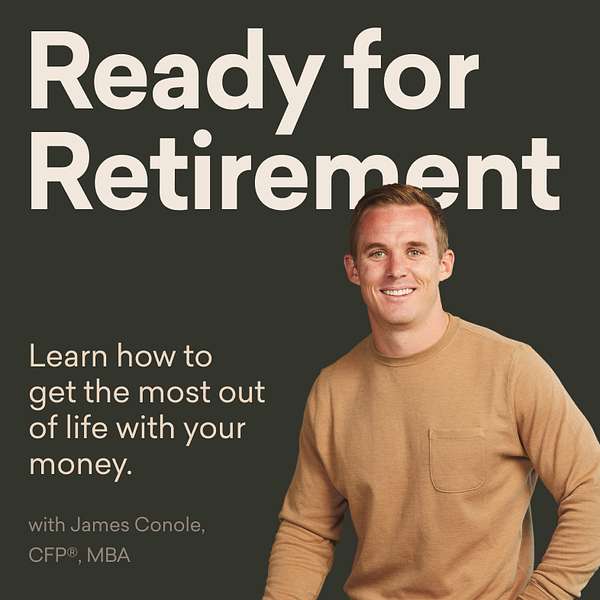
Ready For Retirement

5 Things You'll Wish You Knew Before You Retired

James Conole, CFP® Episode 165

Use Left/Right to seek, Home/End to jump to start or end. Hold shift to jump forward or backward.

0:00 | 15:46

When you retire, there are surprising things you’ll wish you knew beforehand. Unlike social security, IRAs, or Medicare, most people don’t often plan for the emotional and personal matters of retirement.

James discusses the five things people often regret not understanding before retirement. 


Questions Answered:
What do people regret not knowing before retirement?
How can you avoid those mistakes?

Timestamps:
0:00 Intro
3:20 Regret one
5:54 Regret two
7:42 Regret three
9:14 Regret four
11:34 Regret five
13:45 Summary
14:30 Outro

Create Your Custom Strategy ⬇️


Get Started Here.

Join the new Root Collective HERE!

 When you retire, you're gonna realize that there are some things you wish you had known ahead of time. And surprisingly, these things have nothing or little to do with what you might guess. It's not the usual things, it's like social security or Medicare, or even Roth conversion strategies. That being said, these things are crucially important if you wanna make sure that you're getting the most life out of your money, especially in retirement.

So in today's podcast, I'm gonna walk you through the five of the things that you're gonna wish you had known before you retired.

When you think about retirement, the first things that probably come to mind are things like, how much should I contribute to my 401k? When should I collect social security? How do I minimize taxes? And while all these things are very important, they're not the things that you're gonna wish you had known before you were retired.

And not to say they're not important, but there's some other things that you're just not gonna think of, or at least most people don't think of. And I say this because I've worked with dozens and dozens of retirees at Route Financial. I've seen hundreds of different situations in between this experience and industry data.

We've narrowed down the five biggest things that most people wish they had known before they were retired. And in today's podcast, I'm gonna share those with you. Before we jump in, I always like to highlight the review of the week as a way of saying thank you to those of you who have left the review.

Thank you so much for those that do. It really helps us. It helps people who are looking for good information. And today's review of the week comes from Sandy 8 0 8. Sandy 8 0 8 leaves a five star review that says excellent breakdown. James. I loved episode one 60 in my mind, I knew that my withdrawal rate would fluctuate and that I needed to account for changing needs, but the way you broke it down and quantified how much I would need in each bucket, I.

And now to calculate it to the present value made so much sense to me. Thank you for sharing your wisdom. I learned so much from your podcast. Well, Sandy 8 0 8, thank you very much. Thank you to all of you who are leaving reviews more and more people finding the podcast every month. And that's thanks to listeners like.

You who are leaving reviews, who are telling coworkers, who are telling friends and family. So thank you for doing that. Thank you for listening, and I hope you continue all of you to find wonderful and valuable content in the things that we put out. So let's now get to the episode, the five things that you're gonna Wish you knew before you retired.

And like I said, these don't have to do with what you might think. It's not the Medicare plans and the social security and the investments and the taxes and the estate planning. Not that those things aren't important. But most people expect those things to be important. Most people, to an extent at least have a plan for those types of things.

The types of things that people look back on and say, wow, I really wish I had known this before. Retiring. Most often have nothing to do with finances. They have everything to do with the personal side or even the emotional side of retirement. And the first thing, the first thing people wish they knew before retiring.

Is they wish they had done more traveling while they could. Yes. They look at retirement and yes, when they talk about what they're gonna do in retirement, they talk about traveling. They talk about trips to Europe. They talk about not having to be confined to one week of the year to take their big trip.

That's something they really look forward to. But when that time comes, oftentimes maybe someone, they're retiring and they're 65. They're 67, they're 70, and they're still traveling, but they're looking back and saying, oh gosh, I really wish I had traveled more. Before I retired, and the reasons for that are twofold.

Number one, the older you get, oftentimes the less you have energy, the less you have in terms of your health, the less mobile you might be. And so the longer you put off retirement, the less you can actually enjoy some of these travels. So the most obvious reason for this is if you can do some of your traveling before you retire, maybe you can more fully enjoy that, just in terms of having the energy and the capabilities of fully experiencing that.

Now, number two. Is sometimes people think of retirement as a distinctly different time in their lives than their working years, and to an extent this is correct. You're not going to the office 40, 50 hours a week. You're retired, so you don't have to do any of that if you don't want to. However, It's not as if you as a person automatically change before retirement and then after retirement.

And so what people tend to find is they say, man, I wish I had done some of these travels earlier. This is a great big world and it's gonna be really difficult to see all the things that I wanna see. So instead of trying to think of life in two distinct stages, pre-retirement to post-retirement, I wish I had integrated what I want life to look like.

Starting while I'm still working. Yes, work is going to take up a big chunk of your time, but that's not to say that everything that you want to do in life should be deferred until after your retirement date. So a lot of people, they wish that they had done a better job of trying to balance the demands of work.

But also the things that they liked to do. So how can you do the things you want to do as soon as possible? And by the way, this doesn't apply just to travel, although travel's kind of a big one because it does take chunks of time to do. But how can you start doing those things as soon as possible, while also balancing long-term planning?

There's a financial aspect to this as well. Sometimes people get in the head space of, oh, I can't take that trip. I can't do these things because I need to save every last penny I have for retirement. Well, sometimes that's the case depending on your situation. But more often than not, your final years of working, it's more the compound growth on your investments that's gonna be driving your portfolio returns higher unless, so your own contributions.

And I've done a few episodes about that, so you can go back and listen to those. So people will wish they had thought less about trying to save every penny for retirement up until the time they retired and then spending it all extravagantly after they retired. And having more of a balanced approach. So that's one of the things people wish they had known before retirement is wishing they had traveled more even during their working years.

The second thing they wish they had known before retiring is they'll wish they had something to retire to. When I ask people, I'll say, what does retirement mean to you? And without hesitation, a lot of 'em will say, well, freedom, there is the freedom that comes with retirement. And that's true, but there's two types of freedom.

There is freedom from, and there's freedom too. Now retirement for everyone is freedom from you. Have freedom from having to check in and report to bosses and deliver reports on time. That's freedom from now. The other part of freedom that people miss is the Freedom two. Now, freedom two is actually the real freedom.

It's the exciting freedom, but it's also the harder freedom of how are you going to design a life that's fulfilling, that's fun, that's enjoyable, that allows you to do the things you want to do, but that's not automatically gonna happen just because you turned in your two weeks notice. So when people look back on their retirement, they wish they had known they had something to retire.

Two, and this doesn't happen on accident. This involves being intentional and saying, how am I gonna structure my days? What are the things that I care about? Whether this is with relationships or hobbies, or faith or finances or volunteering, or whatever it might be. What am I going to structure my days doing to ensure that freedom two is fulfilled in my life?

So when you think about retirement, think about a blank slate. And start thinking before you get to that time, what do you wanna do with that blank slate? What do you want to design your days to be like? Yes, you'll likely still have some demands of things you need to do around the house or errands to run, but that's only gonna take so much of your time.

What are the meaningful things to you that you're gonna look back on and say, I'm glad I did that. I'm glad I never stopped learning. I never stopped growing. I never stopped having relationships. How can you think about those things ahead of time? So by the time that you retire, you do have something to retire to not just retire from.

The third thing that people will talk about when they look back upon their retirement is they'll say they wish they had more friends. Now, a natural byproduct of working or 35, 40, 45 years of your life is many of your interactions are with people at work. Now, whether you call these people friends or not, the reality is for most people, most of your social interaction comes from work.

And whether or not you love what you do for work or you hate what you do for work, there's a good chance there's at least some people at work that you connect with and you connect with them in a healthy way. So when you think about retirement, yes you have freedom from that job. You don't have to go to work anymore.

But sometimes there's a negative to that. And the negative is some of those social interactions are also stripped away. So when you think about retirement, how do you replace that? What clubs do you wanna be part of? What groups do you wanna be part of? And this doesn't need to be complicated, this is just where you're gonna find your friendships, where you're gonna find your interactions.

This could be neighbors. If you're fortunate enough to have wonderful neighbors. This could be clubs you're part of. This could be church. You're part of, this could be anything, but what are you going to do to make sure that you have those relationships that most people would cite as being one of the number one causes of happiness and contentment throughout retirement is the quality of their relationships.

So how can you understand that? And not just that, but how can you start building those relationships? Before you retire, don't retire, and then say, okay, then I'm gonna go work on making friendships. But what can you do so that by the time you retire, you have a great group of friends or community or people that will be there with you that you can get that social interaction from?

The fourth thing people will commonly say they wish they had known before they retired is they wish they hadn't bought that house. Now, this can be for a couple different reasons. Sometimes they buy a new house because it's the same size as what they've always owned going into retirement, but they realize, hey, when they retire, they maybe don't need as much space as they did when they were younger and raising a family and had many more rooms that they were needed in order to shelter everyone that same big house.

Those may be great when the kids were there and lots of activities were happening there. That great big house can be a lot to take care of in your retirement years. And if we go back to retirement representing freedom, do you really want that freedom being consumed with taking care of the home? Now?

Maybe, but maybe not. So just make sure that something that's a home that you're gonna want to be in for some time in retirement. The second situation where people will say, you know what? I wish I hadn't bought that house isn't necessarily because of the size of the house, but it's because of the permanence of it.

And I often see this when someone retires in one state but then moves to a different state. So they move to a different state. They sell their home that they were living in prior to the move, and they immediately purchase another one. Well, there's nothing wrong with that if you know you're gonna be in that new state, in that specific house indefinitely.

But sometimes people are making these moves after only having visited a place one, two, maybe three times. So what are the odds that specific home and that specific place is going to be the best place for you indefinitely. Now, maybe it's good. Maybe there's good odds. I don't know you and I don't know where you're looking to move, but for a lot of people, They would rather, in retrospect, have spent the first year maybe renting, even doing short term rentals, getting a sense of, is this the place I want to live?

Is this the city? Is this the community? Is this the home? And by buying a place immediately, there's a degree of permanence. There. There's not a ton of flexibility when you buy a home because if you want to quickly sell it, as you know, it's not necessarily easy to do. So there's costs involved, there's time involved, there's energy involved.

So a lot of people, when they're making a big move in retirement, In retrospect, they wish they hadn't bought immediately. They wish they would've gone somewhere, rented for a bit of time, exploring the place, seeing what they like, what they don't like, and then make that final decision. But not necessarily making it right away before having all the information that'll be helpful to have to make that decision.

And then finally, the fifth thing that people say they wish they had known before they were tired. Is this, they say they wished they had spoke with their partner about retirement expectations. Now you might say, that seems so obvious, James. Well, of course, have you and your spouse ever have disagreements because of a lack of communication?

Now, I love my wife like crazy, but it's not uncommon for us to have disagreements that often stem from having different expectations about how something would go. And it never even occurred to us to talk about it because it just was assumed that something would go the way we thought it would. Well, retirement's the same way.

Retirement's this great big thing, and if you're not talking about it, of expectations of what each spouse or each partner's looking for, you're going to have some disagreements because my guess is as you're thinking about this, you have either consciously or even subconsciously, you've built up expectations about what retirement will look like for many years and even decades.

Now your spouse, when they think about retirement, either consciously or subconsciously, they have probably set up expectations about what they believe retirement will look like. Unless there's communication there, those expectations may be different. One spouse may love home improvements while the other would rather travel or golf or sale, or do anything else.

Or even if both of you expect to travel, if you don't talk about what that travel looks like, there may be disagreements. One spouse might think of travel and think of three or four week trips to Europe. While the other thinks of travel and says, yeah, we're gonna take three day weekends, but we're gonna be driving all over the country.

You know, we're gonna be doing things, but for short little time periods before returning home. So if these things aren't communicated, you're going to have miscommunication, you're gonna have unmet expectations, you're gonna have agreements. So little things such as chores, who's doing what, when will we have breakfast?

Or lunch or dinner. What do social interactions look like with the neighbors or with kids or with grandkids? How do you even just bring these conversations up so that when you retire, even if you're not perfectly on the same page, you at least understand where the other is coming from so that you can make the most of that time together?

And ideally you're doing this communicating before you retire so you don't get to retirement, and then start to realize how differently you view that next period of life. So that is it for today. Those are the five things. Number one, I wish we traveled more while we could. Number two, I wish we had something to retire too.

Number three, I wish we had more friends. Number four, I wish I hadn't bought that home. And number five, I wish I'd spoke with my partner about retirement expectations. Those are five of the things most people wish they had known before they retired. So my hope is if you're not retired yet, these are the things that are gonna be helpful so that even if your finances are in perfect order, you can realize the job's not quite done yet.

How do we get the personal side, the emotional side, the relational side, right? So that when you retire, it's not just about having a secure income, but it's also about making sure that's the most fulfilling time possible. So that is it for today. As always, thank you for those of you who have listened and left reviews.

If you've not already done so, be sure to check us out on YouTube at Route Financial. Also be sure to subscribe to our newsletter. We're all about creating content that will help you to get the most life out of your money. So to do that, just go to route financial partners.com, and there's a place where you can subscribe right to our newsletter so that every single week you'll get great information delivered right to your inbox.

That is it for today. Thank you for listening, and I'll see you all next time.